Florida Loosened Its Permit Rules In July. Bradenton's Oldest Closing Risk Didn't Get The Memo.
September 17, 2026
September 17, 2026
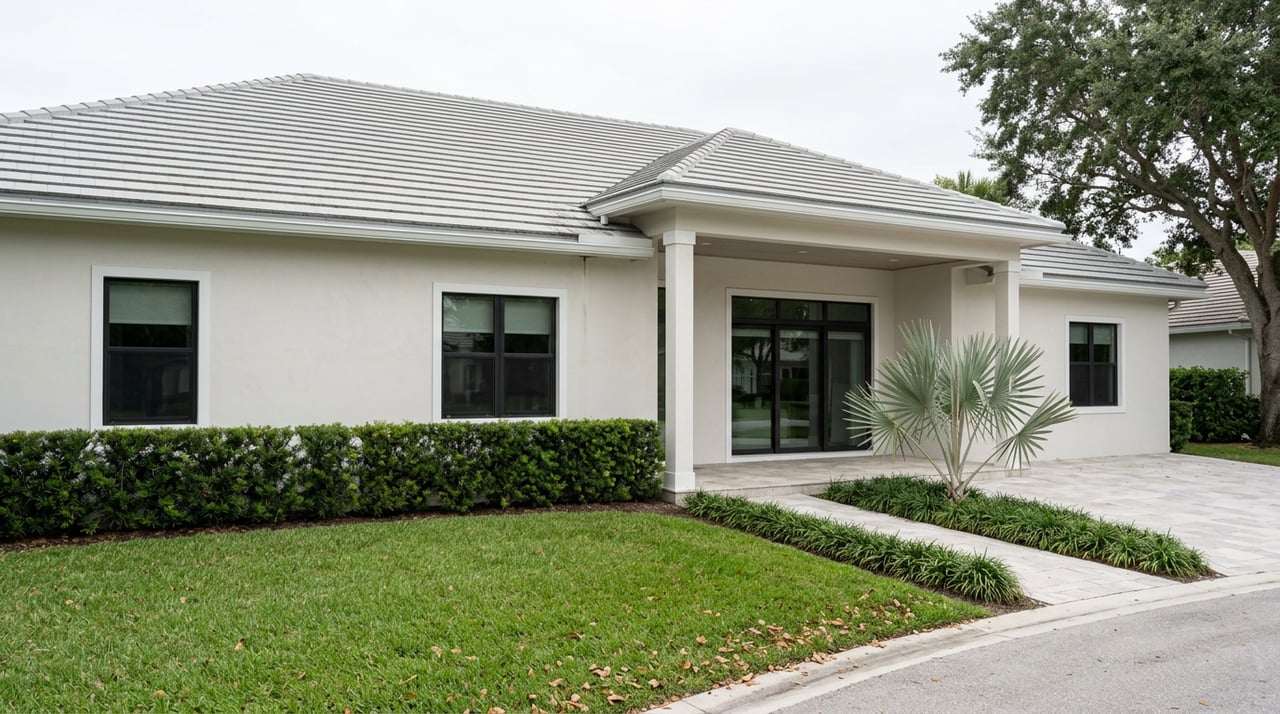
A three-bedroom block house in an older Bradenton neighborhood goes under contract in September. The kitchen was updated years ago, the roof got a new membrane sometime in the mid-2010s, and at some point a rear patio turned into a screened lanai. None of it looked complicated on a walkthrough. Then the title company runs its standard municipal lien search and finds the roof permit was never closed out. A final inspection that should have taken twenty minutes in 2016 never happened, and the closing that was supposed to take three weeks stretches toward two months while the seller scrambles to get a county inspector back out to a job that was finished a decade ago.
That scenario, or some version of it, is the single most common reason a Bradenton sale stalls. It is also the exact problem that Florida's new permit law, HB 803, does almost nothing to solve.
The bill has been covered as a win for homeowners, and in a narrow sense it is. Governor DeSantis signed it into law in May 2026, and as of July 1, 2026 it exempts certain small residential repairs from needing a building permit at all. That is a real change. It is just not the change that fixes what has been quietly killing deals in this market for years, and understanding the gap between the two matters before you list an older Bradenton home this fall.
HB 803, now Chapter 2026-63 of the Laws of Florida, exempts work on a single-family home from the permit requirement when the total cost of the job is under $7,500. The exemption is narrower than the headline suggests. Five categories of work are excluded no matter how small the price tag: electrical, plumbing, structural, mechanical, and gas. What is left is mostly cosmetic. Interior painting, flooring, cabinet swaps, drywall finishing and similar non-structural work can now skip the permit process, provided the job stays under the dollar threshold and does not touch one of the five excluded trades.
The exemption also does not apply automatically. A homeowner or contractor still has to submit a written request to the local building official describing the scope and value of the work. And the law explicitly closes the obvious workaround: you cannot split a $12,000 renovation into three $4,000 invoices to dodge the threshold.
The other detail that matters most for this market: the exemption does not apply to property located in a FEMA flood hazard area, full stop. That single carve-out determines whether a huge share of Bradenton's housing stock benefits from this law at all.
Here is the piece that gets lost in the "permit-free renovations" framing. The exemption is prospective. It applies to work performed on or after July 1, 2026. It does nothing to touch the permits that are already sitting open in the county's system from a roof job in 2016, a pool enclosure in 2009, or an addition that was never finaled a decade ago. That backlog is untouched by this law, and it is the actual source of the delays that have made permit history one of the most consistent friction points in Bradenton closings.
Nothing about how that backlog gets discovered has changed either. A title company or lender still runs a municipal lien search as a standard part of the transaction, and that search still surfaces open, expired, or unfinaled permits regardless of what happened on July 1. The new $7,500 exemption changes what a homeowner needs to do for their next small project. It does not touch what a buyer's title company finds when it pulls the file on a job that was completed years before the law existed.
Here is the practical difference for anyone thinking about listing this fall:
| Before July 1, 2026 | After July 1, 2026 | |
|---|---|---|
| New $3,000 flooring or cabinet job | Permit rules varied by local interpretation | Exempt with a written request, if outside a flood zone |
| A 2016 roof permit never finaled | Surfaces in a municipal lien search | Still surfaces, unchanged |
| Municipal lien search at closing | Standard practice | Standard practice, no change |
| Property in a FEMA flood hazard area | Full permit rules apply | Full permit rules still apply |
The left column and the right column look almost identical for anyone whose issue predates July 1. That is the point.
Manatee County's own floodplain guidance lays out the zones plainly: flood zones that start with "A" or "V" carry the highest risk, flood insurance is typically required, and it is these properties that lose the HB 803 exemption entirely, no matter how small the repair. Zones labeled "X" are considered low risk, where flood insurance is not typically required, and it is only in these zones that a homeowner's next minor cosmetic project can actually use the new exemption.
That means two sellers preparing to list similarly priced homes this fall can face entirely different rules depending on which side of a flood line their lot sits on. A seller with an inland, Zone X block house who wants to refinish the floors before photos can plausibly skip the permit on that job if it stays under $7,500 and involves no electrical, plumbing, structural, mechanical, or gas work. A seller with a low-lying or waterfront property in a mapped flood hazard area gets none of that relief, even for the exact same $4,000 flooring job, because the flood zone exclusion applies regardless of scope or cost.
Either way, neither seller gets any help with the permit that has already been open since before this law existed. That is the piece worth sitting with before assuming the new rules solve anything for a home that has been through a few rounds of renovation already.
Bradenton sits at the boundary of two separate permitting systems, and that boundary is where a lot of sellers lose time they did not expect to lose. A property inside city limits is permitted through the City of Bradenton's own Accela Citizen Access portal and building division. A property in unincorporated Manatee County goes through the county's Building Division, headquartered at 1112 Manatee Avenue West, using its own Accela Online Services portal. The two systems keep separate records, and a home near the city boundary can easily have permit history split across both.
Before listing an older home in this market, it is worth working through a short list:
None of this is dramatic. It is paperwork. But it is the paperwork that decides whether a Bradenton closing moves in three weeks or stretches into two months, and it has nothing to do with the new law everyone is talking about this year.
Does HB 803 forgive or close out old open permits automatically? No. The exemption applies only to qualifying work performed on or after July 1, 2026. A permit that was pulled and never finaled before that date still has to be resolved the same way it always did.
How do I know if my property qualifies for the new exemption? Check the parcel's flood zone status first. If the property sits in a FEMA-mapped flood hazard area, the exemption does not apply regardless of the project's cost or scope. If it does not, the work still has to stay under $7,500, avoid electrical, plumbing, structural, mechanical, or gas trades, and go through a written exemption request to the local building official.
Will a buyer's lender or title company still check my permit history even if my recent work was exempt? Yes. Municipal lien and permit searches remain a standard part of Florida closings. An exempt job that was properly documented with a written request should show no open permit, which is the outcome a seller wants. That documentation is also the record that protects a seller if a future buyer's inspector or agent asks questions about the work.
Does this change anything for a home I'm buying, not selling? The same logic applies in reverse. A clean permit history search across both the city and county systems, checked against the flood zone map, tells you whether you are inheriting someone else's unresolved paperwork before you sign anything.
If you're weighing whether to list an older Bradenton home this fall, or you're trying to figure out what a specific parcel's flood zone and permit history actually say before you make an offer, that is exactly the kind of groundwork Chiaro REALTORS® walks through before a property ever hits the market. Reach out for a straightforward read on your specific address and what it will take to get to a clean closing.
Stay up to date on the latest real estate trends.


Sarasota Art
photo from The Merry Widow

A Friday on Main Street, hour by hour
We pledge to provide our clients with distinguished, personalized service. We are passionate about helping our clients achieve their real estate goals, and we take pride in negotiating the most beneficial terms on their behalf.
CHIARO REALTORS®
ADDRESS
8334 MARKET ST
LAKEWOOD RANCH, FL 34202