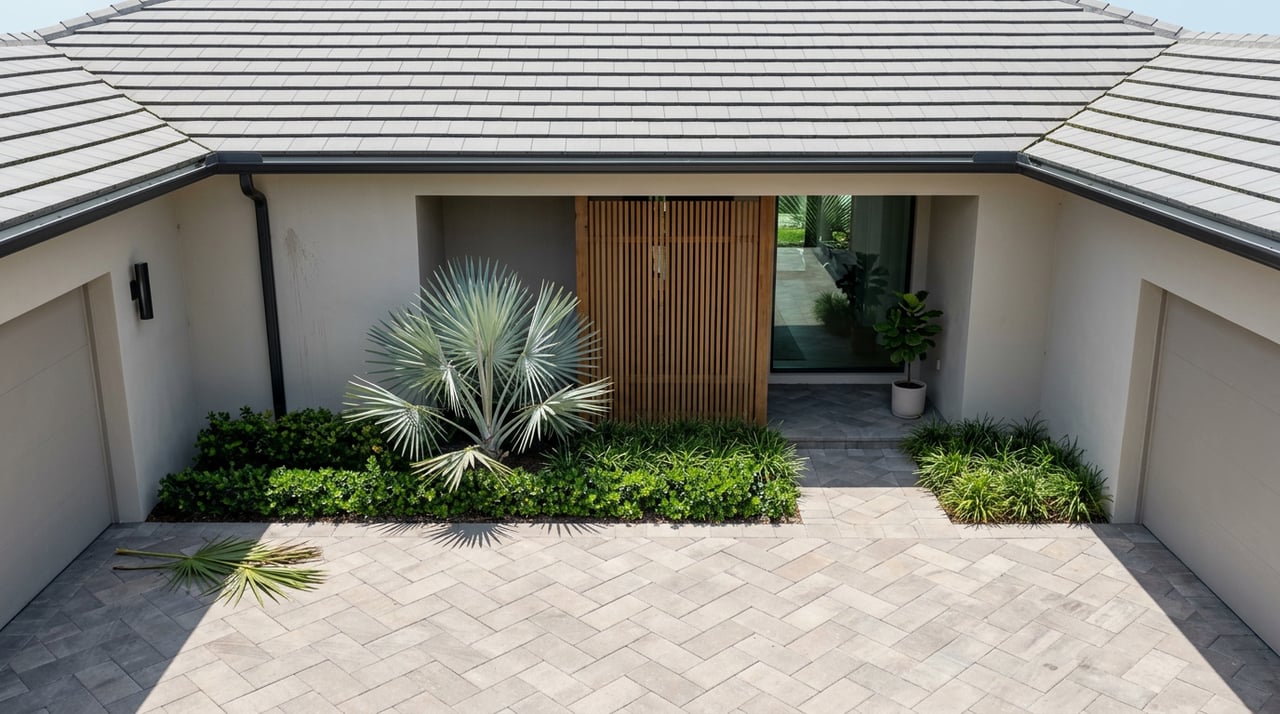
In Lakewood Ranch, the List Price Is Only Half the Story. The Other Half Shows Up on Your Tax Bill.
September 17, 2026
September 17, 2026
A buyer comparing two Lakewood Ranch homes at roughly the same price sees an HOA of $185 a month on the new construction listing and assumes that's the whole picture. It isn't. A few weeks later, when the tax proration lands on the closing statement, a $4,200 annual CDD assessment shows up that never appeared anywhere on the MLS sheet. The house didn't get more expensive. The buyer just found out what it actually cost.
That gap between what a listing advertises and what a parcel actually owes is the single biggest source of budget shock in Lakewood Ranch real estate, and it has nothing to do with negotiating skill or market timing. It comes down to two words that show up on almost every tax bill in the community: Community Development District, or CDD. Understanding how these are structured, and why they vary so sharply from one village to the next, changes which house actually makes financial sense.
A CDD is not a homeowners association. It's a unit of local government created under Florida law, with the authority to issue tax-exempt bonds and levy assessments to build the roads, stormwater systems, entry features, and amenity centers that come standard in a master-planned community like Lakewood Ranch. The HOA you see quoted in a listing is a private, separate charge for day-to-day landscaping and rule enforcement. The CDD assessment is a government charge that lands on the annual property tax bill as a non-ad valorem line item, and it is not part of the MLS HOA field at all.
Every CDD assessment actually runs two clocks at once. One is debt service, the bond repayment for the infrastructure that got built. That clock counts down and eventually hits zero, typically 20 to 30 years after the bonds were issued. The other is operations and maintenance, the annual cost of keeping the lakes, landscaping, and clubhouses running. That clock never stops. It can go up with the district's budget every year the community exists.
This is why a village's age matters more than its zip code. A new phase with freshly issued bonds is paying maximum debt service on top of full O&M. An established village where the original bonds are largely retired is only carrying the O&M piece, sometimes a fraction of what a new buyer next door is paying for a nearly identical floor plan.
Lakewood Ranch spans dozens of individually chartered villages, and the CDD assessment can differ from one street to the next depending on which district it sits in and when that district's bonds were issued. A few examples make the spread concrete:
| Village | What drives the number | Approximate annual CDD |
|---|---|---|
| Amber Creek | Infrastructure financed without a CDD bond at all, a genuine outlier in the community | $0 |
| Star Farms | Wide range because the village mixes entry-level and estate product on the same district | roughly $1,273 to $3,265, depending on lot and home type |
| Lakewood National | Golf course, clubhouse, and resort-style amenities baked into the district's debt | roughly $3,800 |
| Waterside and Azario | Newest phases, bonds just beginning their repayment cycle | full debt service, commonly cited around $4,200 in recent closings |
| Palm Grove | Larger lots carry a bigger share of the district's total bond | up to roughly $5,077 for certain lot sizes |
Layer the HOA on top and the picture gets more specific still. Cresswind, the 55-plus village, lists HOA dues around $416 a month with maintenance included. Sweetwater runs closer to $276 to $327 a month. Windward and Lorraine Lakes both land in the $200 to $400 range. Add any of those to the CDD figures above and the total monthly recurring cost across Lakewood Ranch's villages runs from under $200 a month at the low end to well over $1,100 a month at the high end, before a mortgage payment enters the equation.
The pattern that matters isn't which village has the best amenities. It's that a resale in an established village with a retired bond can carry meaningfully less monthly cost than a new build at a similar price with a fresh 20-year assessment attached. Buyers who compare only the sale price, or only the HOA line, are comparing the wrong number.
Lakewood Ranch sits across two counties, and that split isn't a footnote. The Manatee County side covers the 34202, 34211, and 34212 zip codes. The Sarasota County side, where Waterside sits, is 34240. Crossing that line means a different property appraiser, a different millage structure, and a different school district, on top of whatever CDD and HOA numbers apply to the specific village. Two homes that look identical on paper can carry different total tax pictures purely because of which side of an invisible county boundary the lot falls on.
The CDD assessment doesn't wait for the mortgage to close before it starts costing money. Because it's collected through the county tax bill, it gets prorated between buyer and seller based on the closing date, the same way property taxes are. A buyer closing this fall on a home with a $3,600 annual CDD, for instance, could owe roughly $2,700 in prorated charges at settlement, money that shows up on the closing statement rather than the listing sheet.
Lenders complicate this further. CDD assessments count toward a borrower's debt-to-income ratio the same as property taxes do, which means a buyer who gets pre-qualified based on a monthly payment estimate that leaves the CDD out can find themselves renegotiating the purchase price or coming up with a larger down payment once underwriting catches the full number.
Special assessments add one more layer. Both CDDs and HOAs can levy them when a capital project or funding shortfall comes up, separate from the routine annual charge. In one Lakewood Ranch transaction, a pending $4,500 HOA special assessment for a roof replacement surfaced in the association's meeting minutes, not the listing description, and only came to light because someone pulled the paperwork before the inspection period closed. Right now, Lakewood Ranch Community Development District 5 is finalizing the assessment roll that will appear on the November 2026 Manatee County tax bill, part of the same annual budget cycle every district in the community runs. It's a reminder that these aren't one-time initiation fees. They're recurring obligations that follow the parcel for as long as the bonds or the district exist.
A handful of documents turn guesswork into an apples-to-apples comparison across villages:
Buyers who want to prepay the debt-service portion of a bond should also run the math before committing. The reduction in the annual assessment typically takes 8 to 12 years to break even against the payoff amount, which only makes sense if the plan is to hold the home well past that point.
Does the CDD assessment ever go away? The debt service portion does, once the bonds mature. The operations and maintenance portion doesn't. It continues for as long as the district operates and can rise with the annual budget.
Is a village with no CDD automatically the cheaper option? Not necessarily. Communities without a CDD often carry the equivalent cost in a higher HOA instead. The honest comparison is the combined monthly total, not which line item is missing.
The number that actually predicts your monthly housing cost in Lakewood Ranch isn't the price on the sign. It's the age of the bonds attached to the parcel. Two homes at the same price, in two villages a few miles apart, can carry a monthly cost difference of hundreds of dollars, and the only way to know which one you're looking at is to pull the actual tax bill before you write the offer.
If you're comparing villages and want someone who can pull that paperwork with you before you fall in love with a floor plan, Chiaro REALTORS® works these Lakewood Ranch districts every week. Get access to our private listings and let's find out what a specific address actually costs to own, not just to buy.
Stay up to date on the latest real estate trends.


Sarasota Art
photo from The Merry Widow

A Friday on Main Street, hour by hour
We pledge to provide our clients with distinguished, personalized service. We are passionate about helping our clients achieve their real estate goals, and we take pride in negotiating the most beneficial terms on their behalf.
CHIARO REALTORS®
ADDRESS
8334 MARKET ST
LAKEWOOD RANCH, FL 34202