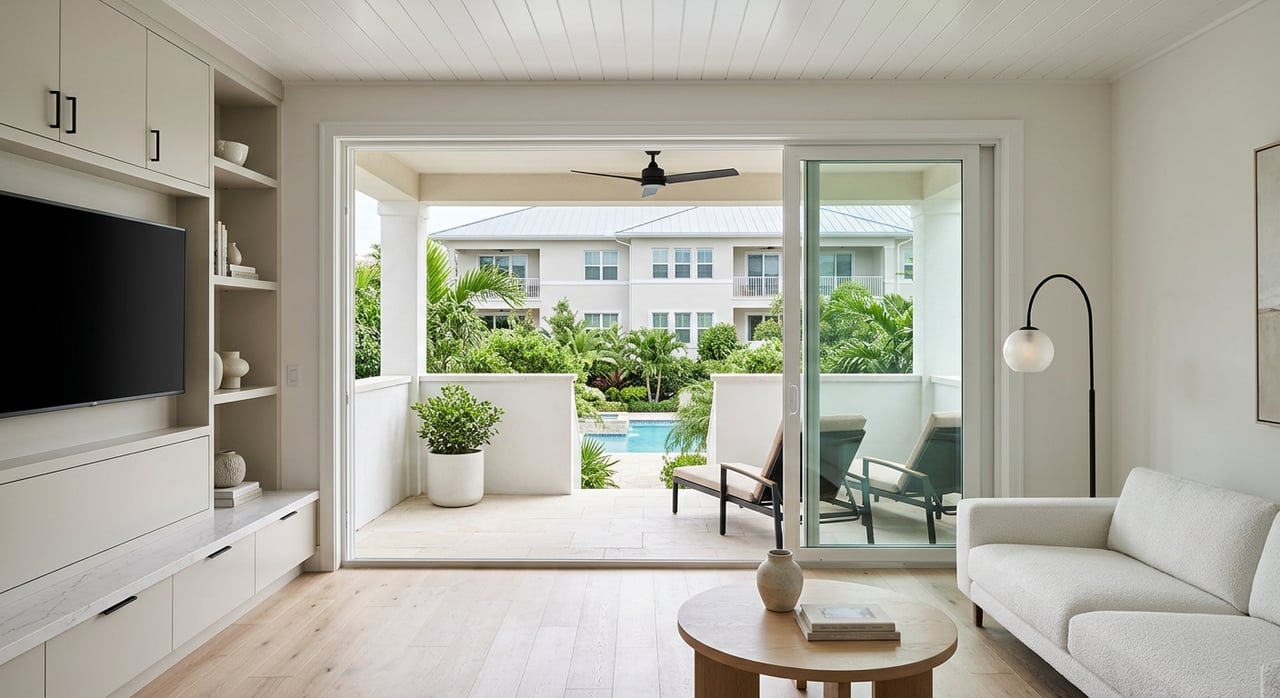
Sarasota Condo vs House: How to Choose the Right Fit
April 2, 2026
April 2, 2026
If you are torn between a condo and a single-family home in Sarasota, you are not alone. Many buyers are drawn to the area’s coastal lifestyle, but the right property type depends on how you plan to live, what costs you want to manage, and how much flexibility you need. This guide breaks down the real differences so you can make a smarter, more confident decision in Sarasota. Let’s dive in.
In Sarasota, condos and single-family homes often serve different budgets and goals. According to the January 2026 Sarasota market data, the median sale price was $490,000 for single-family homes and $314,175 for condos and townhomes.
That lower condo entry point can make ownership feel more accessible, especially if you want a second home or lower-maintenance option. At the same time, the same report shows 5.0 months of supply for single-family homes and 8.9 months for condos and townhomes, which suggests condo inventory has been looser in recent Sarasota data.
Price is usually the first filter, but it should not be the only one. A lower purchase price can help your monthly budget, yet it does not always mean lower total ownership cost.
Condos may come with monthly association dues, while single-family homes often bring more direct repair and upkeep costs. In Sarasota, choosing between the two is often a question of how you want to pay for maintenance, not whether maintenance exists.
Condo fees may cover expenses like landscaping, exterior maintenance, water, and sewer, according to Fannie Mae’s HOA guidance. But those fees do not replace your mortgage, property taxes, or all insurance costs.
Fees can also vary widely based on location, building age, condition, property value, and amenities. Fannie Mae also notes that associations may levy special assessments for major one-time expenses, which is why reviewing condo documents is so important before you buy.
With a single-family home, you usually have more control over repairs and vendor choices. You also take on more direct responsibility for routine maintenance, including exterior structure, plumbing, electrical systems, and heating and cooling, based on Fannie Mae’s home maintenance guidance.
For some buyers, that control is a benefit. For others, especially seasonal owners or buyers relocating from out of state, the extra hands-on responsibility can feel like one more thing to manage.
One of the biggest differences between condos and homes is who handles shared and exterior upkeep. In Florida condominiums, the association is generally responsible for common elements unless the declaration assigns certain limited common-element tasks to unit owners, under Florida condominium law.
That structure can simplify ownership if you want fewer day-to-day maintenance decisions. But it also means you are relying on the association’s budgeting, management, and long-term planning.
For condominium buildings that are three habitable stories or higher, Florida law requires reserve accounts and a structural integrity reserve study. The law also requires milestone inspections at 30 years, and every 10 years after that, with some near-saltwater circumstances shortening the initial deadline to 25 years, as outlined in Florida Statutes.
Budgets adopted on or after December 31, 2024 cannot waive or underfund required reserves for covered items. For you as a buyer, that means a condo purchase should include close review of reserves, inspection records, and any history of special assessments.
Single-family homes do not have the same association-driven reserve structure in most cases. Instead, you decide when to repair the roof, update the air conditioning, or schedule exterior work.
That flexibility can be appealing if you want autonomy. It can also mean larger surprise expenses if you do not plan ahead for repairs and replacement cycles.
In Sarasota, location patterns often shape this choice just as much as budget. Condo inventory is concentrated in walkable, waterfront, and beach-adjacent settings, while single-family homes are spread more broadly through Sarasota’s neighborhood network.
The City of Sarasota describes downtown as a walkable urban core and highlights St. Armands Circle as a major shopping and dining district connecting downtown and Lido Beach. Visit Sarasota County also showcases beachfront condo settings on Siesta Key, Longboat Key, and near Siesta Key Beach.
A condo may be the better fit if you want:
This can be especially appealing if you plan to spend only part of the year in Sarasota and want a more turnkey ownership experience.
A single-family home may make more sense if you want:
The City of Sarasota neighborhood resources show how widely residential options are distributed across the area, with more than 50 recognized neighborhoods.
If you may rent the property in the future, this is one of the most important parts of your decision. In the City of Sarasota, single-, two-, three-, and four-family dwellings in certain residential zoning districts must obtain a vacation-rental certificate to advertise or operate as a vacation rental, and the minimum stay is 7 full days and 7 full nights, according to the city’s vacation rental guide.
The city says those requirements do not apply to owner-occupied vacation rentals, condominiums, cooperatives, or rentals of 30 days or more. That can make condos look simpler at the city level, but you still need to check the association rules.
The City of Sarasota code compliance FAQ explains that homeowners associations are private organizations that enforce deed restrictions rather than public agencies. In practice, that means a condo may be exempt from one city requirement while still being limited by its declaration, bylaws, or house rules.
If rental income matters to you, do not assume a condo allows the use you want. Always verify both city rules and project-level restrictions before you move forward.
Your usage pattern can make the decision much clearer. A full-time resident may care more about space, daily comfort, and long-term tax planning, while a seasonal owner may prioritize convenience and lower maintenance.
If the property will be your permanent residence, either type may qualify for homestead exemption. The Sarasota County Property Appraiser FAQ notes that Save Our Homes caps annual assessed-value increases at 3% or the Consumer Price Index, whichever is lower, and homestead exemption does not transfer automatically when you move.
For full-time Sarasota living, the choice often comes down to autonomy versus convenience. If you want yard space and more freedom over the property, a single-family home may feel like the better long-term fit.
If you prefer shared services and less exterior upkeep, a condo can still work well as a primary residence. The key is making sure the monthly fee structure, reserve health, and building governance fit your comfort level.
Seasonal buyers often gravitate toward condos because they can offer a more streamlined ownership experience. That benefit comes with tradeoffs, including greater dependence on association management, fee stability, insurance allocation, and reserve funding, as reflected in Fannie Mae’s HOA overview.
If you only spend part of the year in Sarasota, ask yourself whether you want to manage vendors and exterior upkeep from a distance. Your answer can quickly point you toward one property type over the other.
No matter which path you choose, due diligence matters. In Sarasota, the condo-versus-home decision is not just about square footage or price. It is also about rules, insurance, maintenance structure, and long-term financial exposure.
Before buying a condo, review:
Florida law and lender guidance make these documents essential because they help you understand whether the building is planning responsibly for future repairs.
Before buying a single-family home, review:
Fannie Mae notes that standard homeowners insurance does not include flood insurance, so this step is especially important in coastal Florida.
If you want a lower entry price, less exterior maintenance, and a more turnkey ownership style, a condo may be the better match. If you want more privacy, more direct control, and flexibility in how you manage the property, a single-family home may be the stronger fit.
In Sarasota, the best decision usually comes down to your budget, your time horizon, your comfort with association governance, and how you plan to use the property. If you want help comparing specific neighborhoods, buildings, or homes across Sarasota, Chiaro REALTORS® offers hands-on guidance for buyers, seasonal owners, and investors who want a practical, local perspective.
Stay up to date on the latest real estate trends.
We pledge to provide our clients with distinguished, personalized service. We are passionate about helping our clients achieve their real estate goals, and we take pride in negotiating the most beneficial terms on their behalf.
CHIARO REALTORS®
ADDRESS
8334 MARKET ST
LAKEWOOD RANCH, FL 34202